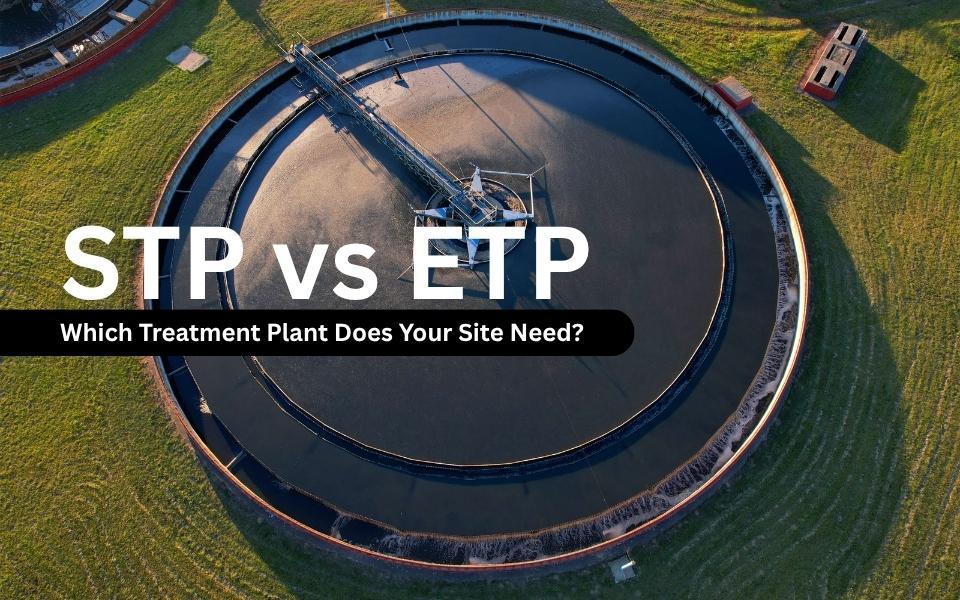
Last month, we were at IFAT India when a student stopped by our stall with a simple question: “What is the difference between STP and ETP?” I liked it because many people planning a project’s waste management system get stuck on exactly this point. So I decided to answer it properly here.
The short version is easy. An STP treats domestic wastewater from kitchens, bathrooms, and daily household use. An ETP treats industrial wastewater from textile mills, pharma units, chemical plants and factories. Different water needs a different plant.
What Is an STP?
STP stands for Sewage Treatment Plant. It cleans the water that leaves toilets, kitchens and bathrooms. This water is mostly organic, so food waste, soap, oils, and human waste make up the load. The good news is that it stays fairly predictable. Sewage from one apartment block looks a lot like sewage from the next.
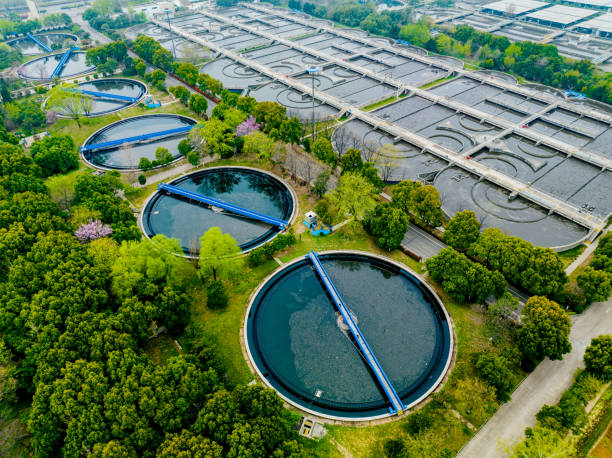
Most STPs follow the same path. Screens catch plastic and rags first, and grit is settled out next. After that, bacteria in an aeration tank break down the organic matter. Finally, the water is clarified and disinfected. Housing societies and municipal bodies often choose an SBR or MBR process because it fits into a small space.
The treated water is useful too. It can be used for gardening, flushing, and cleaning.
What Is an ETP?
An ETP treats water that has already been through a manufacturing process. That water might carry dyes, oils, acids, alkalis, heavy metals, solvents, or dissolved salts. For this reason, you will rarely see two ETPs that look alike.
Think about a textile unit, a pharma plant and a beverage factory. Each one produces a different effluent. An ETP therefore usually begins with equalization and pH correction. Chemical dosing, coagulation, and biological treatment come next. If the water needs more, membranes or evaporation are added on top.
STP vs ETP: Side by Side
| Point | STP | ETP |
|---|---|---|
| Wastewater source | Homes, offices, hotels, townships | Factories and industrial processes |
| Main pollutants | Organic matter, nutrients, pathogens | Chemicals, metals, oils, dyes, salts |
| Quality of inflow | Fairly steady | Changes with the industry and batch |
| Core treatment | Mostly biological | Chemical, physical and biological |
| Design basis | Population and litres per person | Process type and pollutant load |
| Sludge | Mostly organic | Can be hazardous |
| Common reuse | Gardening, flushing, cooling | Process water, cooling, boiler feed |
The Differences That Matter in Practice
Source of the water.
Sewage is consistent from building to building, but industrial effluent is not. A dairy sends fats and milk solids down the drain, while a metal finishing unit sends chromium and acid. Because of this, an ETP has to be built around lab data from the actual process.
Sewage is consistent from building to building, but industrial effluent is not. A dairy sends fats and milk solids down the drain, while a metal finishing unit sends chromium and acid. Because of this, an ETP has to be built around lab data from the actual process.
Treatment method.
An STP leans on bacteria for most of the work. An ETP, on the other hand, often has to fix the water before bacteria can even survive in it. Highly acidic effluent, for example, must be neutralized first. Otherwise, the biological stage fails.
An STP leans on bacteria for most of the work. An ETP, on the other hand, often has to fix the water before bacteria can even survive in it. Highly acidic effluent, for example, must be neutralized first. Otherwise, the biological stage fails.
Sizing.
STP capacity is calculated from occupancy, so more people means more litres a day. ETP capacity follows production volume, water use per unit of product, and peak discharge. In my opinion, sizing an ETP by guesswork is the most expensive shortcut a factory can take.
STP capacity is calculated from occupancy, so more people means more litres a day. ETP capacity follows production volume, water use per unit of product, and peak discharge. In my opinion, sizing an ETP by guesswork is the most expensive shortcut a factory can take.
Sludge.
STP sludge can usually be dewatered and sent for composting or safe disposal. ETP sludge may contain metals or chemicals, so it is handled as controlled waste. A screw press helps reduce sludge volume in both cases.
STP sludge can usually be dewatered and sent for composting or safe disposal. ETP sludge may contain metals or chemicals, so it is handled as controlled waste. A screw press helps reduce sludge volume in both cases.
What the Rules Say
Discharge limits vary by city size and state. For STPs, BOD limits commonly fall between 10 and 30 mg/L, depending on where the plant sits and where the treated water goes. These norms have also shifted over time. The National Green Tribunal pushed for stricter STP standards, and the notified norms apply to plants commissioned from June 2019, as the NGT order explains.
ETP limits differ by industry. In our experience, the number that really counts is the one written in your Consent to Operate, which is issued by the State Pollution Control Board. So check that document before any design is finalized.
Why This Matters Right Now
The treatment gap in India is still large. According to a May 2025 IndiaSpend analysis, urban India produces about 72 billion litres of sewage every day. Operational capacity can handle only 37% of it, and about 28% is actually treated.
So, Which One Do You Need?
Start by asking where your water comes from. If it comes from people, you need an STP. If it comes from a process, you need an ETP. Many sites need both.
Take a factory as an example. The canteen and toilets produce sewage, while the production line produces effluent. I would keep those two streams apart from day one, because mixing them without a plan makes life harder later. Each stream needs its own method.
Reuse deserves a thought as well. Treated water from either plant can replace fresh water in cooling towers, flushing, or landscaping. A slightly better plant often pays for itself through lower water bills.
How Empire Enviro Tech Can Help
We design and supply equipment for both kinds of plants. On the sewage side, our work includes the STP Plant for GUDC, the Sewage Treatment Plant for UP Jal Board, and the Sewage Treatment Plant for Vantara.
On the industrial side, we have delivered the ETP Plant for Varun Beverage, along with an ETP Screw Screen and an ETP Screw Press. We also supply SBR Decanters, MBR Membranes, Surface Aerators, Disc Diffusers and Step Screens, which work in both plant types. If you are unsure where to begin, send us your wastewater details, and our team will suggest a practical setup.
Frequently Asked Questions
What is the main difference between STP and ETP?
An STP handles domestic sewage, which is mostly organic. An ETP handles industrial wastewater, which can carry chemicals, metals, and oils that need extra treatment steps.
An STP handles domestic sewage, which is mostly organic. An ETP handles industrial wastewater, which can carry chemicals, metals, and oils that need extra treatment steps.
Can one plant treat both?
Usually not, since the pollutants and loads are too different. Most sites treat the two streams separately, and some combine the treated outputs later for reuse.
Usually not, since the pollutants and loads are too different. Most sites treat the two streams separately, and some combine the treated outputs later for reuse.
Is an ETP more expensive than an STP?
Often, yes. It needs chemical dosing, closer monitoring, and sometimes advanced steps. Still, the real cost depends on your industry, your flow, and the discharge quality you must meet.
Often, yes. It needs chemical dosing, closer monitoring, and sometimes advanced steps. Still, the real cost depends on your industry, your flow, and the discharge quality you must meet.
Who needs an STP?
Housing societies, hotels, hospitals, malls, colleges, offices and municipalities. Local rules often make an STP mandatory above a certain size.
Housing societies, hotels, hospitals, malls, colleges, offices and municipalities. Local rules often make an STP mandatory above a certain size.
Who needs an ETP?
Any factory that releases process wastewater, including textile, pharma, food and beverage, chemical, paper, and metal units.
Any factory that releases process wastewater, including textile, pharma, food and beverage, chemical, paper, and metal units.
Can treated water be reused?
Yes, for flushing, gardening, cooling, and some process needs, as long as it meets the required quality.
Yes, for flushing, gardening, cooling, and some process needs, as long as it meets the required quality.
I hope the difference between STP and ETP is clear now, and that you can tell which one suits your project. Still have questions? Drop them in the comments below, and our team will be happy to help.